


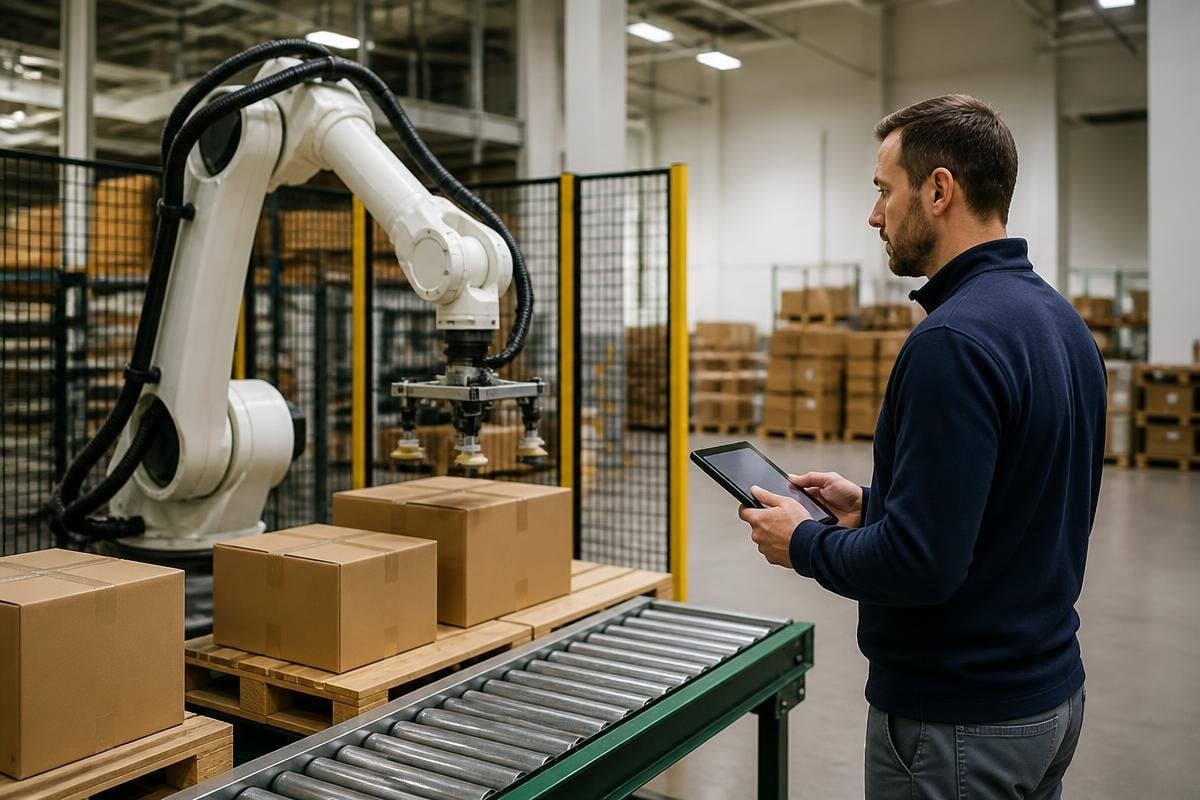
A robot sale ends when the invoice is paid. A lease keeps the maker involved while the robot works, needs service, and may need new software. That change could matter most to a factory or warehouse manager who wants automation without buying the whole system upfront.
- Leasing spreads the cost across regular payments.
- Service and repairs can sit inside the contract.
- The buyer can test a job before buying a fleet.
Why leasing changes the buying decision
A purchase asks you to approve the full cost before the robot has proved its value in your site. Leasing moves that decision toward the task itself: can the robot complete enough work each month to cover its payment and the staff time around it?
That shift helps when the job is clear but the result is still unproven. A mobile robot may move goods between fixed points. A robotic arm may load a machine with repeatable parts. If the work changes after six months, a long ownership cycle becomes harder to defend.
The contract also changes who carries the risk. With a purchase, your team may need to plan for spare parts, software support, repairs, and a replacement cycle.
A lease can place some of those jobs with the maker or a service company, though the contract decides exactly what is included.
The numbers still have to work
Monthly payments can make a robot easier to approve, but they don’t make it cheaper by themselves. You still need to compare the full contract cost with the work the robot can complete during the same period.
A useful calculation starts with hours available, tasks per hour, labour cost, and downtime. Then add site changes, training, network work, safety checks, and any person who must watch or reload the system. A low monthly payment loses its appeal when those extra jobs sit outside the agreement.
The contract length matters too. A short term may cost more each month but give you a way out if the task changes. A long term may lower the monthly figure while tying your budget to one robot, one software setup, and one type of work.
Without a named machine, price, site, and contract, no one can give you a sound return-on-investment figure. The decision needs those details.
Why makers may prefer leases
Selling a robot gives the maker one large payment. Leasing can create regular income and keep the maker close to the machine after installation. That contact can help the maker see failures, collect operating data, and plan service work.
It can also change what makers build. A robot sold once can be judged by its purchase price and spec sheet. A leased robot has to keep working well enough for the contract to continue. Uptime, repair time, software support, and part supply become harder to ignore.
That model has limits. A maker may carry the cost of a failed deployment, while a customer may face a contract for equipment that no longer fits the job. Ownership also gives you more control over the machine after the payment ends. Leasing gives you flexibility only when the terms protect it.
A lease promise still needs records from working sites, not a brochure. Robot24.com’s reporting on robotics deployments can put the monthly fee beside the machine’s task, service needs, and time when a person had to step in. Those facts lead to the next issue: what slows adoption.
What could slow adoption
Leasing works best when the task is repeatable and the robot’s output is easy to measure. It becomes harder when the site changes often, the robot needs frequent human help, or the work depends on unusual objects and layouts.
Contracts can also hide the real cost. Ask who pays for installation, travel, damaged parts, software changes, sensor cleaning, and removal at the end. Check what happens if the robot misses its agreed output or stays idle during a repair.
The open question is whether service teams can support leased robots across many sites without making each contract expensive. The contract promises access to a working robot. It does not remove the need for good maintenance.
A practical leasing check
Use these questions before you compare a lease with a purchase:
- Name the task: write down the exact job, load, cycle time, and hours per shift.
- Count human work: include loading, checks, recovery, cleaning, and training.
- Price the full term: add payments, setup, service, software, repairs, and removal.
- Set an exit rule: record what happens if the task changes or the robot stays idle.
- Check ownership: ask who owns the data, updates, spare parts, and hardware after the term.
- Request proof: ask for a named deployment with the same task and measured output.
I’d choose leasing first when the task is clear but the robot’s long-term fit is still uncertain. For a stable job with known volume, buying may cost less over several years, but only a full contract comparison can show that.
Robot leasing could become larger than robot sales if it gives companies a safer way to start, keeps machines working after installation, and makes makers answer for service. The deciding figure will be the total cost per completed task, not the monthly payment printed on the first page.
