


Dog Training for Newly Adopted Pets: A Practical Guide
Adopting a dog brings companionship, excitement, and new responsibilities. However, settling into an unfamiliar home can be challenging for a dog with an unknown history, limited training, or previous behavioral difficulties. Dog training for newly adopted pets helps establish household expectations, improve obedience, and build communication between dogs and their new owners.
A successful transition requires more than teaching basic commands. Dogs need predictable routines, appropriate boundaries, and opportunities to learn in different environments. With consistent practice and guidance from professionals such as Rob’s Dog Training, owners can help adopted dogs become more confident and better prepared for everyday life.
For families welcoming a rescue dog or an adult dog from a shelter, understanding individual needs is an important first step toward lasting behavioral improvement.
Understanding Your Newly Adopted Dog’s Behavior
Every adopted dog arrives with a different background. Some may already understand basic obedience, while others may need help with house training, leash manners, or responding to their names.
Behavior that appears disobedient may also reflect stress, uncertainty, excitement, or unfamiliar surroundings. A dog that barks at visitors, pulls during walks, or struggles to settle may need clearer guidance and gradual exposure to new experiences.
Instead of assuming a dog should immediately follow household rules, observe how the animal responds to daily situations. Identify specific challenges and prioritize the behaviors that affect safety and comfort.
The commonly discussed three-three-three guideline can help adopters understand the adjustment process: the first few days may involve stress, the following weeks may bring greater familiarity, and the first few months can support deeper adjustment. However, this is a general guideline rather than a fixed timeline. Some dogs settle sooner, while others need considerably longer.
Dog Training for Newly Adopted Pets Starts With Routine
Consistency makes expectations easier for a dog to understand. During the first few weeks, establish a manageable routine that includes feeding, bathroom breaks, exercise, rest, and training.
Create a Comfortable Home Environment
Choose a quiet resting area where the dog can retreat without being disturbed. Keep food, water, bedding, and appropriate toys accessible, and avoid overwhelming the dog with frequent visitors or unfamiliar environments immediately after adoption.
Introduce household members gradually and supervise interactions with children and other pets. Give the dog opportunities to approach voluntarily rather than forcing contact.
A predictable environment also makes it easier to identify behavioral patterns. For example, noticing when a dog becomes restless before bathroom breaks can help owners develop more effective house-training habits.
Establish Clear Household Rules
Decide which behaviors are acceptable before training begins. Determine where the dog can sleep, whether furniture is permitted, and how greetings should happen.
Everyone in the household should follow the same rules and use consistent verbal cues. If one person rewards jumping while another discourages it, the dog may struggle to understand what is expected.
Clear expectations, calm communication, and regular practice help create a foundation for more advanced obedience.
Teach Basic Obedience in Short Sessions
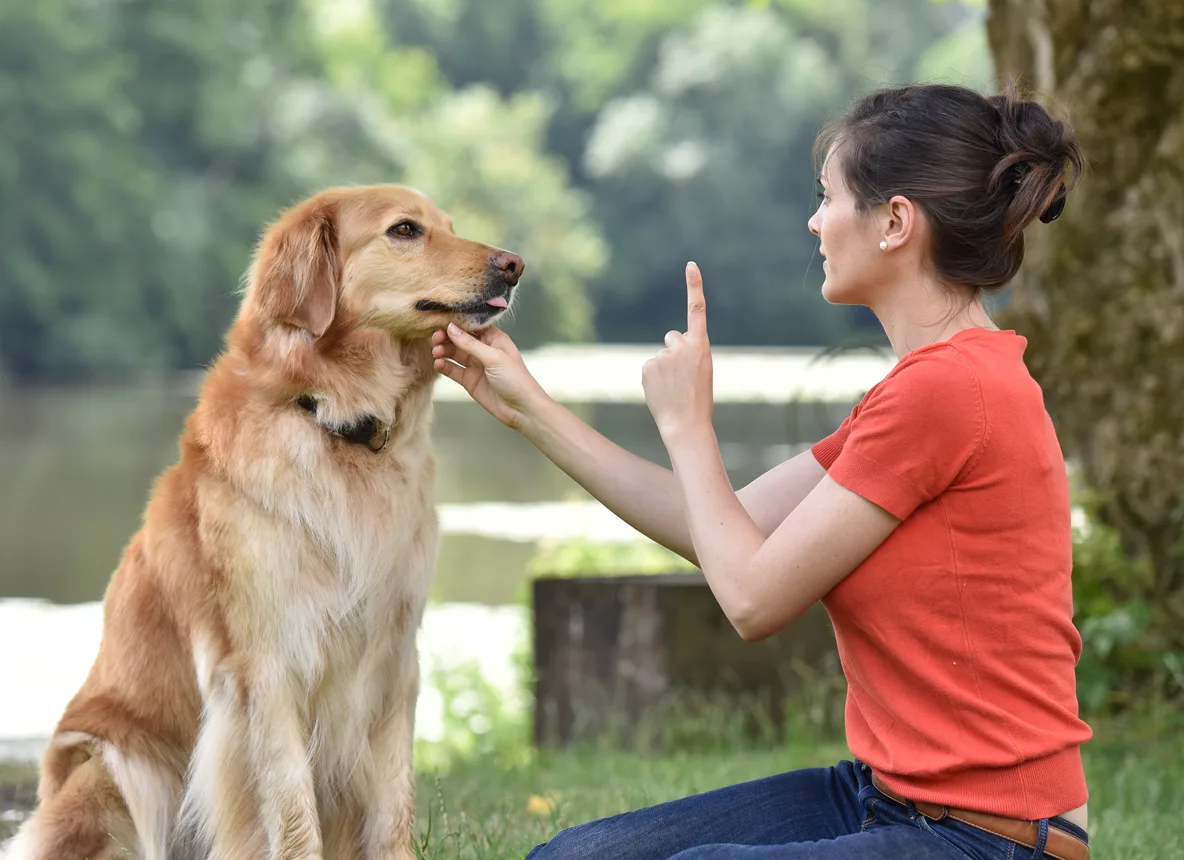
Basic obedience improves everyday communication and helps owners manage common situations. Begin in a quiet area with minimal distractions before practicing in more challenging environments.
Focus on these essential skills:
- Name recognition: Reward the dog for looking toward the owner when its name is called.
- Sit: Encourage the dog to sit before meals, greetings, or other everyday activities.
- Stay and wait: Gradually teach the dog to pause before moving through doors or approaching distractions.
- Come when called: Practice recall in a secure area using an enthusiastic voice and valuable rewards.
- Leave it: Teach the dog to disengage from inappropriate objects or potentially unsafe items.
- Loose-leash walking: Reward walking near the handler without persistent pulling.
Keep early sessions brief and end on a manageable success. Use treats, play, or praise according to what motivates the individual dog. When a behavior becomes reliable in one location, practice it in other suitable settings.
Owners should avoid expecting immediate reliability around unfamiliar dogs, wildlife, traffic, or crowded public spaces. Training becomes more dependable through gradual practice rather than sudden exposure to overwhelming distractions.
House Training and Positive Reinforcement
House training is a common priority when bringing home a newly adopted dog. Even a previously house-trained animal may need time to learn a new schedule and understand where bathroom breaks should happen.
Take the dog outside after waking, eating, drinking, and playing, as well as at regular intervals throughout the day. Supervise indoor activity and watch for signs such as sniffing, circling, or suddenly moving away from the family.
When the dog eliminates in the correct location, provide praise or a suitable treat immediately. Timely rewards help connect the behavior with the desired outcome.
Accidents should be cleaned thoroughly without punishment. Scolding a dog after an accident does not clearly communicate where elimination should occur and may increase anxiety around bathroom behavior.
If accidents continue despite a consistent routine, consider possible medical causes and consult a veterinarian when appropriate. A tailored house-training plan can then address the dog’s individual needs.
Address Leash Pulling, Jumping, and Barking
Some newly adopted dogs display behaviors that make daily activities difficult. These may include pulling toward other dogs, jumping on guests, barking at unfamiliar people, or struggling to respond when distracted.
The most useful approach begins by identifying when the behavior occurs and what may be maintaining it.
For leash pulling, practice in a quiet location and reward the dog for walking on a loose leash. Increase distractions gradually as the dog improves.
For jumping, reward calm greetings and encourage visitors to avoid reinforcing unwanted jumping with attention. Teach an alternative behavior, such as sitting, when greeting people.
For excessive barking, observe the trigger before choosing a training strategy. Barking caused by excitement may require different management from barking associated with fear or territorial behavior.
Dogs displaying growling, snapping, biting, or intense fear require careful assessment. Avoid deliberately exposing them to situations that provoke these reactions. A qualified professional can help identify appropriate management strategies and a suitable training plan.
Build Confidence Through Gradual Socialization
Socialization involves helping a dog become comfortable with people, animals, places, sounds, and everyday experiences. For an adopted dog, the goal is not to introduce every possible experience immediately. It is to create safe, positive opportunities for learning.
Start with manageable activities, such as observing people from a comfortable distance or taking walks in quiet areas. Reward calm observation and allow the dog to move away when necessary.
Avoid forcing greetings with unfamiliar dogs or assuming every dog enjoys dog parks. Some dogs benefit more from controlled introductions and individual training than crowded social environments.
Watch body language carefully. Turning away, repeated lip licking, tucked tails, stiff posture, and attempts to hide can indicate discomfort, although signals should always be interpreted in context.
Gradual exposure allows owners to adjust the difficulty according to the dog’s response. If the dog becomes overwhelmed, increase the distance or return to an easier situation.
When Professional Dog Training Can Help
Home practice is valuable, but some behavioral challenges benefit from professional instruction. A trainer can assess the dog’s current skills, discuss the owner’s goals, and recommend an approach suited to the animal’s temperament and needs.
Professional support may be especially useful when a dog struggles with:
- Persistent leash pulling or unreliable recall.
- Jumping on visitors or difficulty settling indoors.
- Reactivity toward other dogs or unfamiliar people.
- Anxiety-related behaviors or difficulty adjusting to routines.
- Basic obedience that breaks down around distractions.
Rob’s Dogs provides professional dog training services in Phoenix and Scottsdale, Arizona, with options designed around different training goals.
According to its website, private lessons provide one-on-one instruction, allowing trainers to address individual behavioral concerns and demonstrate techniques owners can practice between sessions. In-home private training is also available for owners who prefer guidance in their own environment.
The company’s Board & Train program offers structured training during a dog’s stay at its training facility. The website describes personalized programs that address needs ranging from basic manners to more advanced obedience and behavioral challenges.
Rob’s Dogs also offers behavioral assessments to help identify contributing factors, clarify training goals, and determine an appropriate program. This can be particularly helpful for adopters who are unsure whether private lessons or a more immersive training arrangement would suit their dog.
Program suitability depends on the individual dog, the behaviors involved, and the owner’s goals. Discussing these details with a trainer can help establish realistic expectations before training begins.
Maintain Training After the Initial Adjustment
Learning new behaviors is only part of the process. Dogs also need opportunities to practice those behaviors with their owners in everyday situations.
After a training session, reinforce the same cues during walks, meals, greetings, and other regular activities. Keep expectations consistent and gradually increase distractions as the dog demonstrates reliable responses.
Owners should also understand that training results depend on continued practice. A dog that responds well in a training facility may still need guidance when returning home, encountering unfamiliar visitors, or walking through a busy public area.
Record progress by noting specific improvements, such as fewer pulling incidents, calmer greetings, or more consistent responses to recall cues. These observations help identify what is working and where additional support may be needed.
If progress stalls, review the difficulty of the exercise, the rewards being used, and possible environmental triggers. Adjusting the plan is often more productive than simply repeating a challenging exercise.
Help Your Newly Adopted Dog Become a Confident Companion
Dog training for newly adopted pets works best when clear expectations are combined with patience, structured practice, and an understanding of individual behavior. Establishing routines, teaching basic obedience, improving leash manners, and addressing behavioral concerns early can make everyday life safer and more manageable.
When additional guidance is needed, Rob’s Dog Training provides training options, including private lessons, Board & Train programs, and behavioral assessments, to help owners address their dogs’ individual needs.
With consistent guidance and realistic expectations, adopters can improve communication, strengthen their bond with their dogs, and encourage lasting behavioral improvements at home and in public.
