


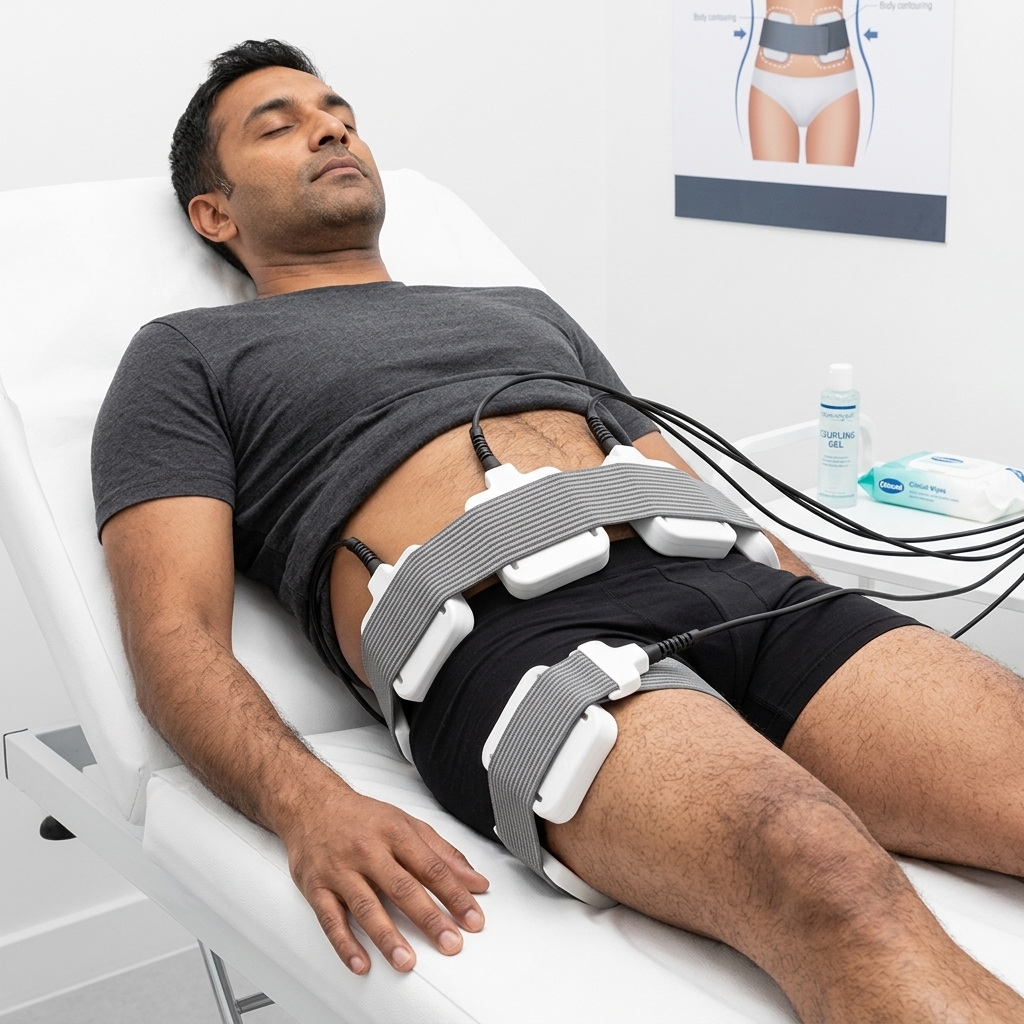
Recovery after laser lipo is often shorter than recovery from traditional liposuction, but the exact timeline depends on the technique used, treatment area, amount of fat addressed, and individual healing. Minimally invasive laser lipolysis may involve several days of downtime, while noninvasive laser fat reduction generally requires little or no downtime.
What Happens Immediately After Treatment?
During the first few hours after minimally invasive treatment, it is normal to experience soreness, tenderness, swelling, or bruising. Your provider may recommend a compression garment to help control swelling and support the treated area during healing. Gentle movement is generally encouraged, while strenuous activity should be avoided until your provider gives you clearance.
Noninvasive laser lipolysis has an easier immediate recovery. Temporary redness, tenderness, or swelling can occur, but patients typically do not need a formal recovery period or activity restrictions.
The First Few Days
For minimally invasive laser lipo, the first several days are usually when discomfort, bruising, and swelling are most noticeable. Many people can return to light daily activities or work within a few days, particularly when their job is not physically demanding.
Your individual experience may differ. Treating a larger area or several areas at once can require more recovery time than treating a small, localized area. Following your surgeon’s instructions is important because pushing yourself too quickly can interfere with healing.
Recovery During the First Two to Three Weeks
By the second and third weeks, many patients begin feeling significantly more comfortable. Bruising generally continues to fade, while swelling gradually decreases. However, the treated area may still feel firm, numb, or slightly uneven as the tissues recover.
Traditional and laser-assisted liposuction recovery guidance indicates that swelling and bruising can remain noticeable for several weeks, even after a person has resumed many normal activities.
If you’re researching laser lipo The Woodlands, consider asking the treating provider exactly how long they expect you to avoid exercise, heavy lifting, driving, and other activities based on the specific technique being used.
When Can You Exercise Again?
Light walking is commonly encouraged soon after minimally invasive procedures because remaining gently mobile supports circulation. More demanding activities, including strenuous workouts and heavy lifting, generally need to wait until your medical provider considers them safe.
There is no single exercise timeline that applies to everyone. A person having a small treatment may progress differently from someone receiving treatment over several larger areas.
When Will You See the Final Results?
One of the most important things to understand is that recovery and visible results happen at different speeds. Early contour changes may become noticeable as swelling decreases, but the final appearance can take several weeks or months to develop.
For noninvasive laser lipolysis, the American Society of Plastic Surgeons notes that results may first become visible around six weeks and become apparent by approximately three months. Minimally invasive procedures can also require months for swelling and tissue remodeling to fully settle.
Skin tightening may continue to develop over time as the tissues remodel. The American Society of Plastic Surgeons notes that firming after laser-assisted liposuction can continue for months.
What Can Help Support a Smooth Recovery?
Good aftercare can make the recovery period more comfortable and help protect your results. Patients should follow their provider’s instructions regarding compression garments, incision care, medications, bathing, physical activity, and follow-up appointments.
Maintaining a stable weight after treatment is also important. Laser lipolysis is designed for localized fat reduction and body contouring rather than significant weight loss. Remaining fat cells can enlarge with weight gain, potentially affecting the appearance of the treated area.
When Should You Contact Your Provider?
Some swelling, bruising, tenderness, and temporary changes in sensation can be expected. However, symptoms that become increasingly severe should not simply be assumed to be part of normal recovery.
Contact your healthcare provider promptly if you develop severe or worsening pain, significant swelling, excessive bleeding, unusual discharge, increasing redness, or other concerning symptoms.
The Bottom Line
For minimally invasive laser lipo, many people can return to light activities within a few days, while swelling, bruising, and tissue changes can continue for several weeks. More strenuous exercise may require additional recovery time. The final contour can take several months to fully settle. Noninvasive laser lipolysis generally involves little to no downtime, although temporary redness, tenderness, or swelling may occur.
The safest approach is to treat these timelines as general guidelines rather than guarantees. Your provider can give you a personalized recovery plan based on the treatment technique, area treated, amount of fat addressed, and your overall healing progress.
